Do you want to do Tandem Skydiving in Himalayas? Unfortunately, as of 2024, there is no skydiving facility in the Indian Himalayan region.
Despite the breathtaking beauty of the snow-capped peaks and the thrill associated with skydiving, the Indian side of the Himalayas does not have operational skydiving centers. This gap often leads to confusion, as online platforms may incorrectly advertise skydiving options in this area.
The absence of skydiving facilities in the Indian Himalayas means that those seeking this extreme adventure will need to look beyond the Indian border.
While the allure of the Indian Himalayas is undeniable, adventurers must turn to neighboring countries to fulfill their skydiving aspirations. This situation underscores the importance of verifying the authenticity of information when planning such high-adrenaline activities.
Note: Follow @SkydiverShweta if you want to learn skydiving in India.
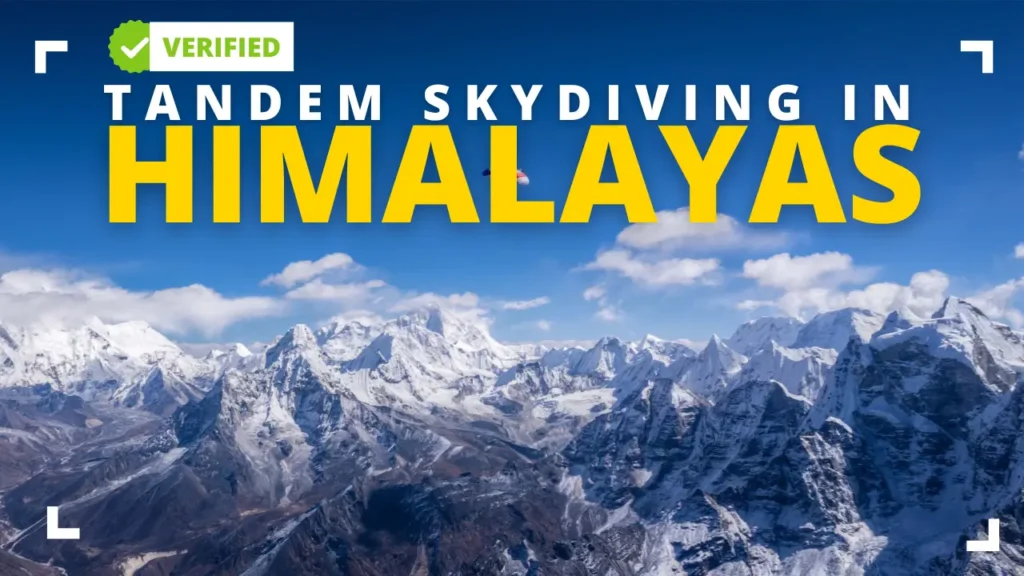
Tandem Skydiving in the Himalayas
While the Indian Himalayas do not offer skydiving opportunities, Nepal’s Himalayas provide extraordinary options for those seeking an unforgettable adventure.
Here are two top-tier service providers for tandem skydiving in the Himalayan region:
Everest Skydive
Everest Skydive is renowned for its high-altitude skydiving experiences. One of the most thrilling offerings is the chance to jump from an AS350 B3 helicopter at an incredible height of 23,000 feet, just below the towering Everest.
- Location and Experience: Everest Skydive offers a high-altitude skydiving experience from an AS350 B3 helicopter at an incredible height of 23,000 feet, just below Everest. The drop zones include Syangboche at 12,340 feet and Amadablam Basecamp at 15,000 feet. This provides an unparalleled view of the world’s highest peak and the surrounding Himalayan landscape.
- Equipment and Safety: The skydiving equipment includes large main parachutes of 300-400 sq ft and a similarly sized reserve parachute. All equipment is fitted with an Automatic Activation Device (AAD) for added safety. The gear also features a skydiving oxygen system to manage the low oxygen levels at high altitudes. Additionally, altimeters and thermal gloves are provided to ensure comfort and safety during the jump.
- Preparation: Each tandem passenger is thoroughly briefed and equipped before the jump. The equipment is tested and approved for high-altitude skydiving, ensuring a safe and exhilarating experience.
Each tandem passenger will be fully briefed and equipped before the jump, ensuring both safety and comfort.
GoBeepBeep
GoBeepBeep offers a unique and limited-time skydiving experience over the Himalayas. This operation is typically conducted for just one week each year, making it a rare opportunity for adventurers.
- Location and Experience: GoBeepBeep offers a unique skydiving experience from a helicopter, with operations conducted for just one week each year near Pokhara. This limited-time event allows you to skydive over some of the highest Himalayan peaks, providing a rare and spectacular adventure.
- Expert Team: The service includes a team of legendary skydiving instructors and photographers, such as Alberto Avalis, the Chief Tandem Instructor of Skydive Dubai. The team features world record holders and champions, ensuring a premier skydiving experience. Female instructors are also available for those who prefer them.
- Equipment and Setup: GoBeepBeep imports all skydiving gear and sets up a temporary drop zone in the remote mountains. The equipment is tailored for high-altitude conditions, ensuring both safety and comfort. The setup is specifically designed to handle the unique challenges of skydiving in the Himalayas.
The skydiving gear and infrastructure are designed to handle the challenges of high-altitude skydiving, making this a unique and unforgettable adventure.
These providers offer unparalleled opportunities for skydiving in the Himalayas, each delivering a unique and breathtaking experience in one of the world’s most spectacular regions.
Read More: Best Skydiving Places in India
How to reach Himalayas for Skydiving?
To participate in skydiving in the Himalayas, you first need to travel to Kathmandu, Nepal. This city serves as the gateway to the Himalayan region and is well-connected with international flights. From Kathmandu, a domestic flight will take you to Pokhara, which is the primary hub for skydiving activities in Nepal.
Once in Pokhara, you will need to arrange transportation to the specific skydiving drop zone. This may involve additional flights or road travel, depending on the location of the drop zone. It’s advisable to coordinate with your skydiving operator to ensure a smooth transfer to the site.
If you’re eager to experience tandem skydiving in the Himalayas, here are some straightforward steps to get there:
- Choose Your Base:
- Nepal: Most skydiving adventures in the Himalayas start from Nepal. Kathmandu and Pokhara are popular base cities.
- India: If you’re coming from India, consider flying to Delhi and then connecting to your Himalayan destination.
- Flights:
- Kathmandu: Daily flights operate from Delhi to Kathmandu.
- Leh: Alternatively, you can take spectacular seasonal high roads over the Himalayas from Manali or Srinagar to reach Leh.
- Arrival in Kathmandu:
- Once in Kathmandu, you’ll prepare for your adventure.
- Arrange your gear and get ready for the breathtaking experience.
- Pokhara (For Skydiving):
- From Kathmandu, take a domestic flight to Pokhara.
- Pokhara is where the magic happens! You’ll jump out of an airplane with the majestic Himalayas as your backdrop.
- Backup Days:
- Keep in mind that weather conditions can affect skydiving schedules.
- Plan for backup days in case the weather doesn’t cooperate on your chosen day.
Remember, tandem skydiving in the Himalayas is a once-in-a-lifetime adventure. Enjoy the thrill and the awe-inspiring views!
Best time to visit Himalayas for Skydiving?
The optimal time for skydiving in the Himalayas is between October and November. During these months, the weather conditions are generally clear and stable, which is crucial for a safe and enjoyable skydiving experience. The visibility during this period allows you to fully appreciate the stunning views of the snow-covered peaks and vast landscapes.
Skydiving outside this window can be challenging due to unpredictable weather patterns, including heavy snowfall and poor visibility. Therefore, planning your skydiving adventure during this period will enhance your chances of having a memorable and awe-inspiring experience.
When planning your tandem skydiving adventure in the Himalayas, consider the following:
- Seasons and Weather:
- November: This month is considered the prime season for skydiving in the Himalayas. The weather is stable, skies are clear, and visibility is excellent. You’ll have unobstructed views of the majestic peaks.
- June to September: If you prefer warmer weather, consider visiting during the monsoon season. While it’s not the most popular time for skydiving, it offers a unique experience. The lush greenery, misty valleys, and occasional breaks in the rain create an otherworldly atmosphere.
- Avoid Winter: The winter months (December to February) are generally not suitable for skydiving due to extreme cold, snow, and unpredictable weather conditions.
- Views and Peaks:
- Mount Everest: Imagine freefalling with Mount Everest as your backdrop! The world’s highest peak stands tall, and you’ll get a bird’s-eye view of its snow-covered slopes.
- Other Peaks: During your descent, you’ll also spot other iconic peaks like Lhotse, Makalu, and Cho Oyu. These giants of the Himalayas create an awe-inspiring panorama.
- Helicopter Jumps:
- Some skydiving experiences in the Himalayas involve helicopter jumps. You’ll board a helicopter, ascend to a high altitude, and then leap into the sky. This adds an extra layer of adventure and exclusivity.
- Cultural Immersion:
- Beyond the adrenaline rush, the Himalayas offer a rich cultural experience. You’ll interact with local communities, witness ancient monasteries, and learn about the region’s traditions.
- Consider extending your trip to explore nearby towns like Pokhara or Namche Bazaar.
- Backup Days:
- Keep in mind that weather conditions can change rapidly in the mountains. Plan for backup days in case your scheduled jump is affected by rain, wind, or low visibility.
- Physical Fitness:
- Tandem skydiving requires moderate physical fitness. Be prepared for a short hike to the drop zone and some adrenaline-fueled moments during the jump.
- Booking in Advance:
- Popular skydiving spots like Pokhara can get crowded during peak seasons. Book your tandem jump in advance to secure your slot.
Remember, tandem skydiving in the Himalayas is not just about the thrill—it’s about connecting with nature, conquering fears, and creating memories that will last a lifetime. Enjoy the breathtaking views and the rush of adrenaline!
How can I book my Tandem Skydiving slot in Himalayas?
Booking your tandem skydiving slot in the Himalayas is an exciting step toward an unforgettable adventure! Here’s how you can do it:
Booking a tandem skydiving slot in the Himalayas involves contacting the service providers directly. Everest Skydive and GoBeepBeep offer online booking options through their respective websites.
It’s important to review their availability and schedules as skydiving operations are often limited to specific times of the year.
For a seamless booking experience, ensure you provide all necessary details and adhere to any pre-requisites or health requirements. Booking in advance is highly recommended due to the high demand and limited operational period.
What do you wear to skydive in Himalayas?
When preparing for tandem skydiving in the Himalayas, it’s essential to choose the right clothing for comfort, safety, and functionality. Here’s what you should wear:
- Base Layers:
- Thermal Base Layer: Start with a thermal base layer to keep your body warm. Temperatures at high altitudes can be significantly cooler, so this layer is crucial.
- Athletic Wear:
- Opt for lightweight, flexible, and form-fitting athletic clothing.
- Athletic T-Shirt: Wear a moisture-wicking T-shirt to stay comfortable during the jump.
- Shorts or Leggings: Choose comfortable shorts or leggings that allow freedom of movement.
- Footwear:
- Wear comfortable athletic shoes (like running shoes) with good traction.
- Avoid open-toed shoes or sandals.
- Headgear:
- Winter Cap: A woolen cap to cover your head and ears.
- Balaclava: A fleece or woolen balaclava to protect your neck, nose, and mouth.
- Sun Cap: Don’t assume the sun won’t show during a winter trek. Protect your face from UV rays with a sun cap.
- Sun Protection:
- Sunscreen: Apply sunscreen with at least SPF 50+ to shield your skin from the high-altitude sun.
- Layers:
- Instead of one thick layer, opt for multiple thinner layers. This helps trap heat and keeps you warm.
- Jumpsuit: If provided by the skydiving company, wear a specially designed jumpsuit for aerodynamics and protection during freefall.
- Avoid Hoods: Don’t wear anything with a hood—it can be a safety hazard during the jump.
For skydiving in the Himalayas, you will be provided with specialized gear to ensure your safety and comfort. Everest Skydive equips you with high-altitude jumpsuits, helmets with oxygen face masks, and thermal gloves designed for extreme conditions. The jumpsuits are tailored to accommodate the high-altitude environment, ensuring that you remain warm and agile during the jump.
The gear is designed to handle the unique challenges of skydiving at such high elevations. You will receive detailed instructions on how to use the equipment and what to wear underneath the jumpsuit. This preparation is crucial for maintaining safety and maximizing your skydiving experience.
Remember, comfort and functionality are key. Dress appropriately for the adventure, and enjoy the breathtaking views as you leap from the sky!
How much time does it take to skydive in Himalayas?
The duration of a tandem skydiving experience in the Himalayas can vary based on several factors. Here’s a general breakdown:
- Preparation and Briefing:
- 30 minutes to 1 hour: You’ll receive safety instructions, get fitted with your gear (jumpsuit, harness, goggles), and have a briefing with your instructor.
- Flight to Altitude:
- 30 minutes to 1 hour: Depending on the drop zone and weather conditions, you’ll board an aircraft (usually a small plane or helicopter) to ascend to the desired altitude.
- Freefall and Parachute Descent:
- 1 to 2 minutes: The most exhilarating part! During freefall, you’ll experience the adrenaline rush as you plummet toward the Earth.
- 5 to 7 minutes: After the parachute opens, you’ll glide gently down, enjoying the breathtaking views of the Himalayas.
- Landing and Celebration:
- 5 to 10 minutes: You’ll touch down at the drop zone, and your tandem skydiving adventure will come to an end.
- Celebration: Take a moment to celebrate your achievement and relish the memories.
Keep in mind that weather conditions, group size, and any unforeseen delays can impact the overall time. But the adrenaline rush and the views of the Himalayas will make every second worth it! 🪂
How long is the skydive video in Himalayas?
The duration of the skydiving video can vary depending on the package you select. Typically, the video captures the entire experience, from pre-jump preparations to the freefall and landing. The final edited video usually lasts between 5 to 10 minutes, providing a comprehensive overview of your skydiving adventure.
The video includes footage from both the freefall and the parachute descent, offering a vivid portrayal of the breathtaking views and the thrill of the jump. It’s a great way to relive the experience and share it with friends and family.
In summary, a skydiving video in the Himalayas can range from 1 minute (freefall only) to several minutes (including freefall and canopy ride). Ultimately, it’s up to you and your videographer to decide the perfect length to capture this once-in-a-lifetime experience! 🪂
What is the fall rate for skydiving in Himalayas?
The fall rate for skydiving in the Himalayas is influenced by factors such as altitude and weather conditions.
At high altitudes, the freefall rate can be slightly lower compared to lower altitudes due to reduced air density. Generally, the fall rate during a tandem skydive is approximately 120 to 150 mph in a belly-to-earth position.
This rate can be adjusted by the skydiving instructor to ensure a safe and comfortable experience. The instructors are trained to manage the fall rate effectively and to provide a controlled and exhilarating descent.
Why is skydiving so expensive in Himalayas?
Skydiving in the Himalayas tends to be more expensive due to several factors. The high-altitude environment requires specialized equipment and expertise, which significantly increases the cost. Additionally, the remote locations and limited operational periods add to the expense.
The cost also reflects the exclusivity and uniqueness of the experience. Skydiving over some of the world’s highest peaks provides an unparalleled adventure that is both rare and exceptional. The investment in safety, equipment, and expert instruction contributes to the overall expense.
Skydiving over the Himalayas is indeed an extraordinary experience, but its cost reflects several unique factors. Let’s delve into why this adventure comes with a hefty price tag:
- Limited Availability and Special Permits:
- Skydiving in the Himalayas is a rare opportunity. Due to the region’s hostile weather conditions for most of the year and its geographical sensitivity, skydiving is not feasible or allowed.
- Special permits are required from the Government of Nepal to organize this event. These permits are granted for just one week in November.
- Helicopter Operations:
- Unlike conventional drop zones, where planes take skydivers to altitude, the Himalayan skydiving experience involves helicopter jumps.
- Helicopter operations are more expensive due to fuel costs, maintenance, and logistical challenges.
- Tandem Skydiving:
- Most participants opt for tandem skydiving, where they jump with an experienced instructor. Tandem jumps require additional safety measures and personnel.
- The cost includes the tandem instructor’s fee, equipment, and training.
- Logistics and Accommodations:
- Organizers arrange accommodations, domestic flights (to Pokhara and return from Kathmandu), ground transportation, and other logistics.
- Ensuring a seamless experience in a remote location adds to the overall cost.
- Safety and Training:
- Safety is paramount. Skydiving operators invest in high-quality gear, rigorous training, and skilled instructors.
- The cost covers safety protocols, pre-jump briefings, and emergency procedures.
- Scenic Value:
- The Himalayas provide a spectacular backdrop for skydiving. Participants get to witness snow-capped peaks, lush valleys, and cloud-kissed landscapes.
- The scenic value contributes to the premium pricing.
- Exclusivity and Rarity:
- The limited availability and unique setting make this skydiving experience a bucket-list item.
- People are willing to pay more for once-in-a-lifetime adventures.
In summary, while skydiving in the Himalayas may be expensive, the memories, adrenaline rush, and unparalleled views make it truly priceless for those who dare to take the leap! 🪂🏔️
Alternative Place to Skydive in India
For those interested in skydiving within India, SkyhighIndia in Haryana is a recommended alternative.
This facility offers skydiving experiences in a controlled environment, providing an exciting adventure without the need to travel abroad.
The facility is equipped with state-of-the-art gear and experienced instructors, ensuring a safe and thrilling experience.
FAQs
1. What is the weight limit for skydiving in Himalayas?
The weight limit for skydiving in the Himalayas typically ranges from 110 to 220 pounds (50 to 100 kg). Each operator may have specific weight restrictions, so it’s essential to check with the service provider.
2. Is skydiving completely safe in Himalayas?
Yes, skydiving in the Himalayas is safe when conducted by experienced and reputable operators. Safety measures include specialized equipment and thorough training for both instructors and participants.
3. Is skydiving in Himalayas worth it?
Skydiving in the Himalayas offers a unique and breathtaking experience that is considered by many to be worth the investment. The stunning views and the thrill of freefall make it a memorable adventure.
4. How many hours required for skydiving in Himalayas?
The total time required for skydiving, including preparation and the jump itself, is usually around 3 to 4 hours. This includes pre-jump briefing, the flight to the drop zone, and the descent.
5. Who is eligible for skydiving in Himalayas?
Participants must generally be in good health and meet the weight requirements set by the skydiving operator. Some operators may also have age restrictions, so it’s important to check eligibility criteria.
6. Can I skydive alone in Himalayas?
Tandem skydiving is the most common option in the Himalayas. Solo skydives typically require prior experience and certification, which may not be feasible in high-altitude environments.
7. What is the closest airport in Himalayas?
The closest major airport for accessing skydiving sites in the Himalayas is Pokhara Airport. From there, you can arrange transportation to the drop zone.
8. Can minors skydive in Himalayas?
Minors may be allowed to skydive with parental consent and under specific conditions set by the skydiving operator. Age requirements vary, so it’s important to confirm with the service provider.
Conclusion
While the Indian Himalayas do not offer skydiving opportunities, the neighboring Nepalese Himalayas present some of the world’s most exhilarating skydiving experiences.
With reputable operators like Everest Skydive and GoBeepBeep, you can enjoy a once-in-a-lifetime adventure amidst the highest peaks on Earth. For those looking to experience the thrill of freefall, exploring these options in Nepal is highly recommended.
